Lydie.cc - Solar Power |
|
Specifications:
Ground mount installed 2017, roof mount 2019. System paid off Oct 2023. We bank approximately 5MWh each summer, and draw on it in winter via 1:1 net metering in Maryland. Our home supports the grid! Additional efficiencies include heat pump water heater, inverter mini-split HVAC, dual-stage central HVAC, and extra blown insulation. |
|
 The property, with plenty of solar on pretty much everything.  Solar is lucrative. Not only do I have $6 electric bills, but SREC and utility payments are free cash money! (as of 02-07-2025)  Hyundai Kona Electric 2023 - 280 mile range  eGauge monitoring system shows power produced and where it's going  SolarEdge monitoring shows panel by panel performance  The Schneider inverters are all
connected together to share energy.
 We also have solar charged lawn equipment. The GreenWorks Pro 60v line is amazing! electric power washer & electric 2-stage snowblower  electric zero-turn mower  40kWh AGM Lead-Acid Battery  5kWh Fortress LFP Battery  20kWh LFP Battery w/Custom BMS 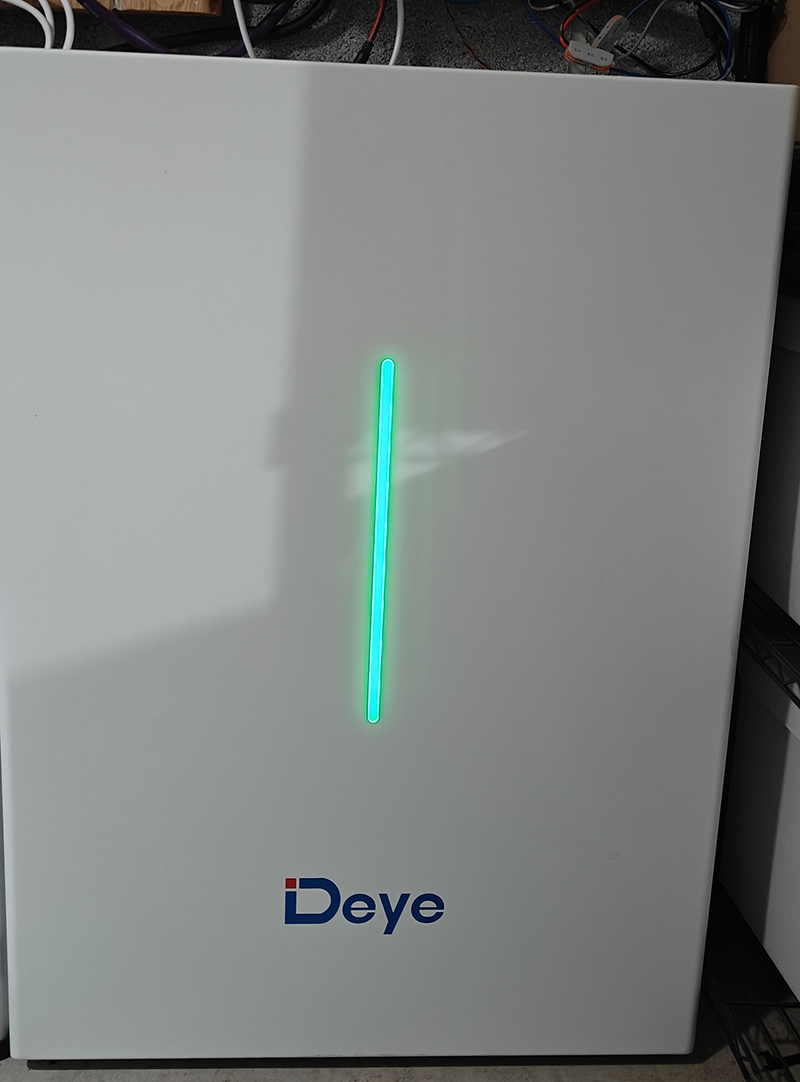 10kWh Deye LFP Battery 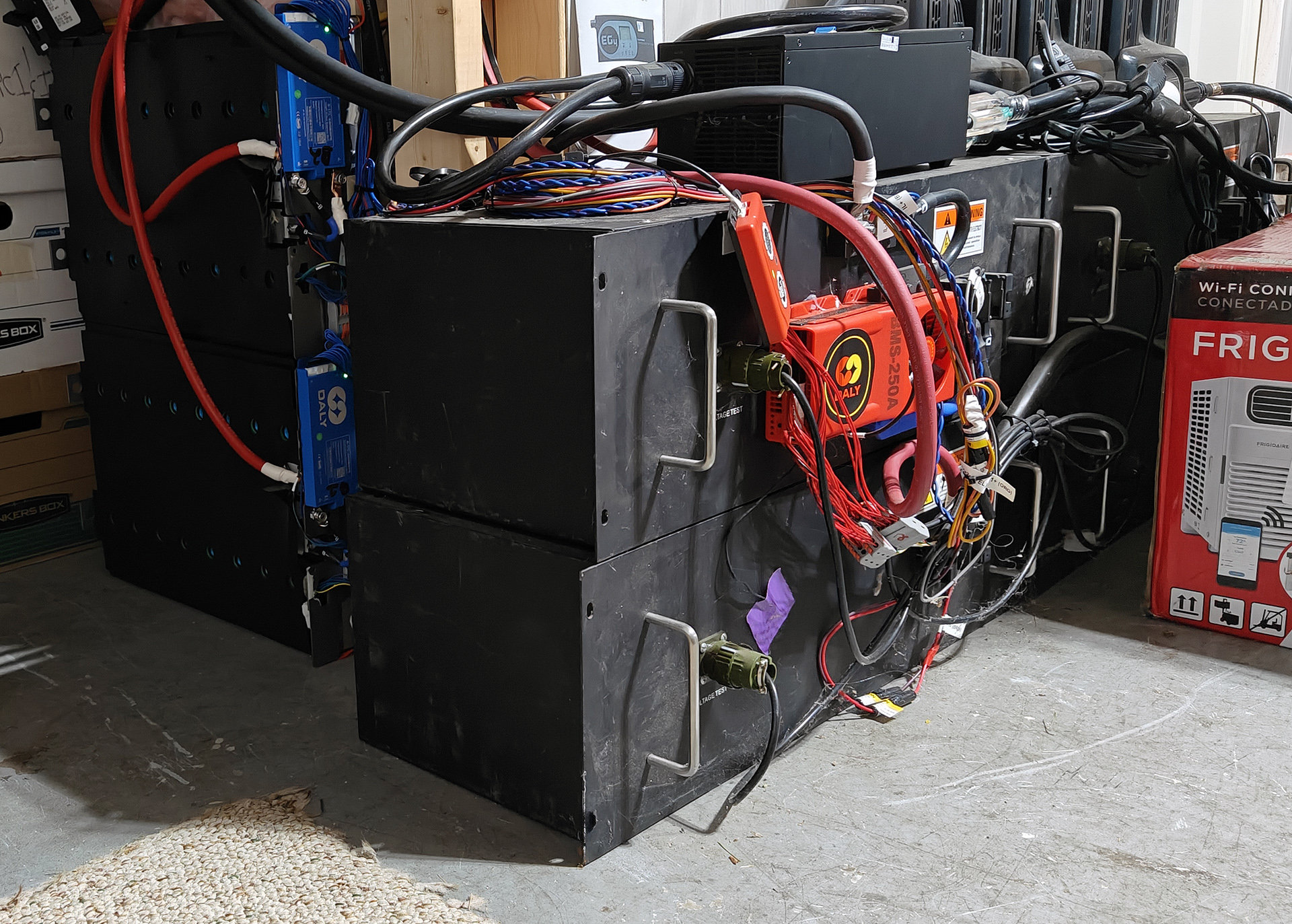 As of 2026, the Microgrid LFP stack. 30kWh (Note the size of the 10kWh 2026 batteries on the left (two 5kWh units), and the 20kWh 2014 batteries on the right (four 5kWh units) 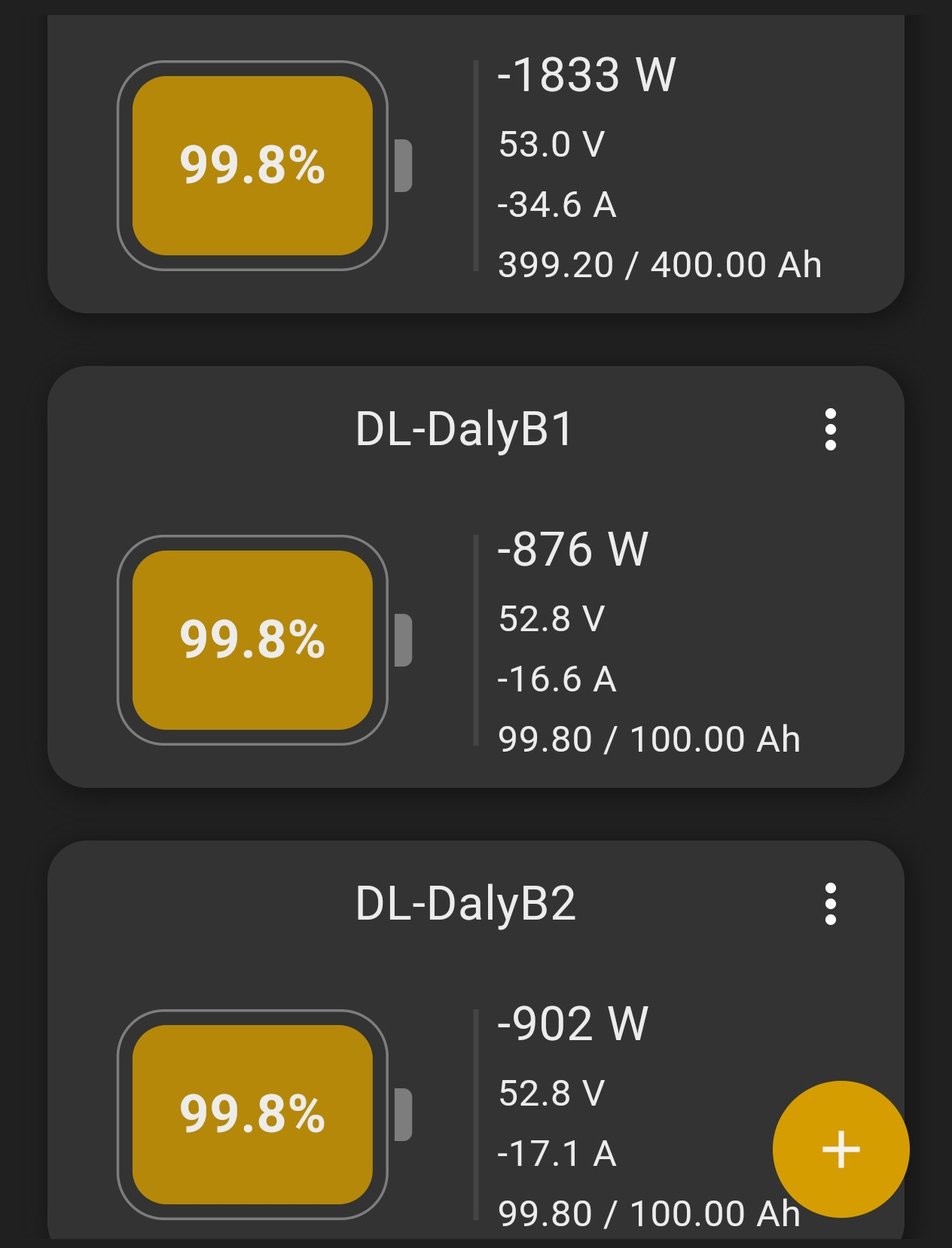 The microgrid system's multiple BMS units under load |
Go Home